
Your four-month-old has had a runny nose for two days. Tonight her breathing sounds different — faster, and her little chest seems to pull in with each breath. You’re standing over the crib at 2 am trying to decide whether this can wait until morning.
Call your pediatrician right away if your baby is breathing fast or working hard to breathe, if the skin between or below the ribs pulls in with each breath, if there are pauses in breathing, if the lips or tongue look bluish or gray, or if she’s taking less than half her normal feeds. Any one of these needs same-day evaluation.
What is RSV, and why is it more serious in babies?
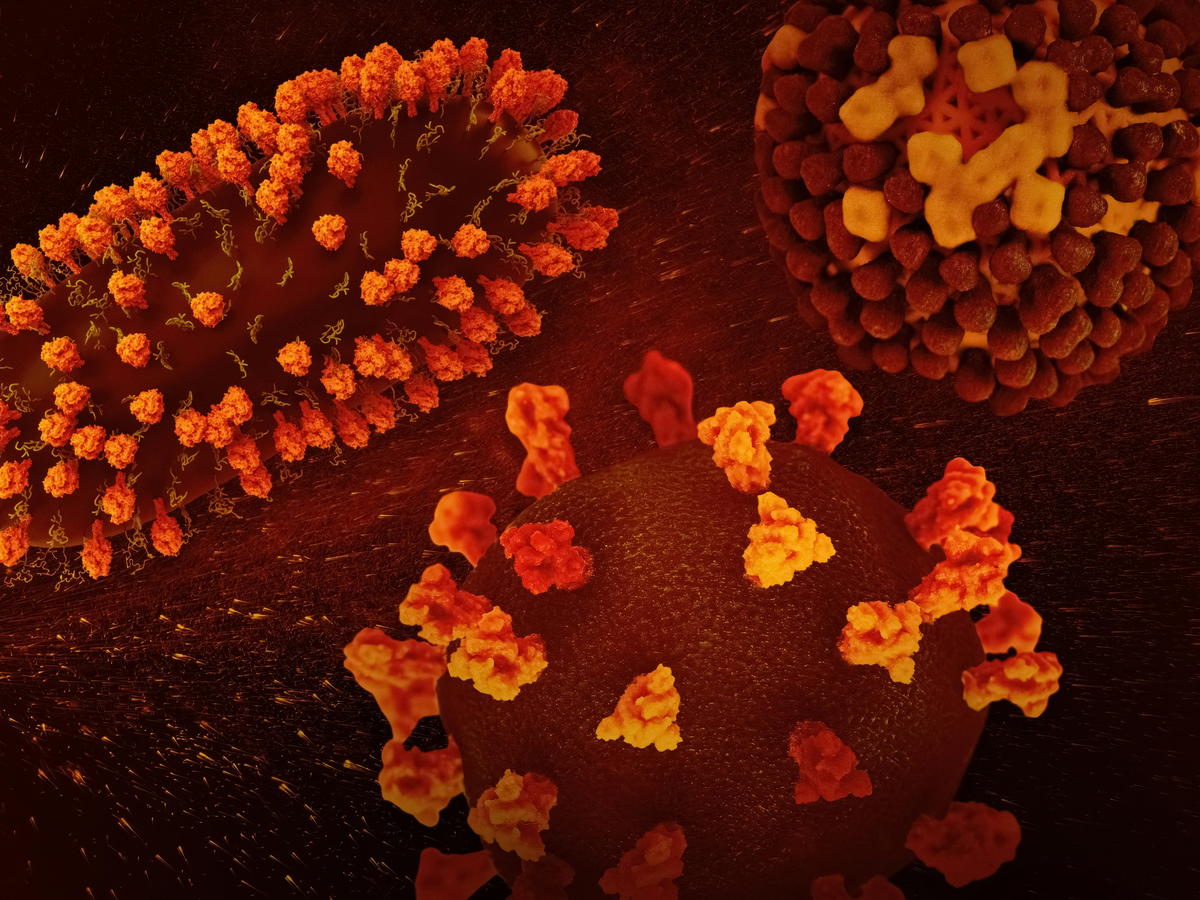
RSV (respiratory syncytial virus) is a common respiratory virus that causes cold-like symptoms in older kids and adults but can inflame the tiny airways in a baby’s lungs — a condition called bronchiolitis. Because infant airways are so narrow, even a small amount of swelling or mucus can make breathing difficult.
The scale of it, per the CDC:
- Most children get RSV by the time they turn 2
- Before RSV immunizations became available, RSV was the leading cause of infant hospitalisation in the United States, with an estimated 58,000–80,000 children under 5 hospitalised each year
- Roughly 2 to 3 out of every 100 infants under 3 months are hospitalised with RSV annually
RSV season in North Texas generally runs from fall into early spring, and cases typically peak between December and January.
What are the warning signs of RSV in an infant?
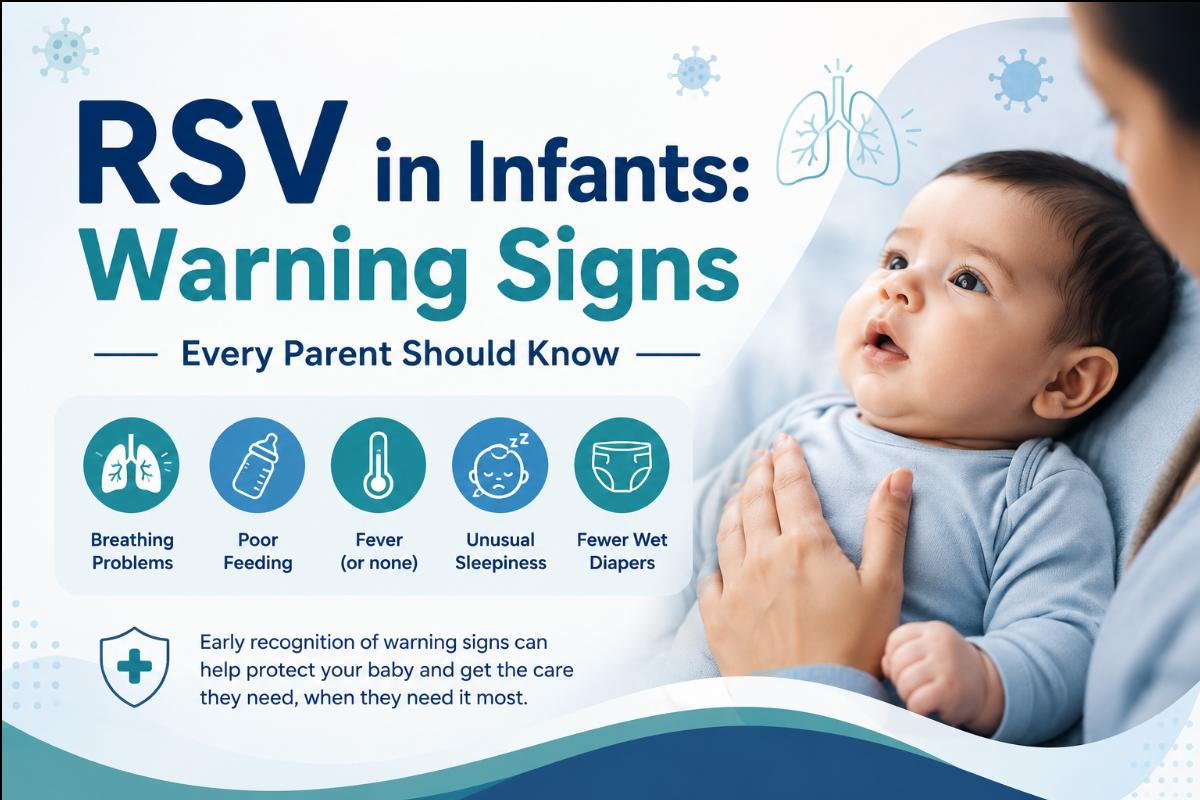
Watch the breathing above all else. The signs that matter most are:
- Fast breathing. Count breaths for one full minute while your baby is calm. Sustained breathing above roughly 60 breaths a minute in a young infant is a reason to call.
- Retractions. The skin pulls inward between the ribs, below the ribcage, or at the base of the neck with each breath.
- Nasal flaring. The nostrils widen with effort on every breath.
- Grunting or head bobbing. Both signal a baby working hard to move air.
- Wheezing or a tight, wet cough that has moved from the nose down into the chest.
- Apnea — pauses in breathing longer than 10 seconds. In babies under 6 months, this can be one of the earliest signs.
- Bluish or grey lips, tongue, or face. This is an emergency; call 911.
- Poor feeding. Taking less than half of normal, or pulling off the bottle or breast to catch a breath.
- Fewer wet diapers — less than one every 8 hours suggests dehydration.
- Unusual sleepiness, limpness, or a baby who is hard to wake or console.
One important detail parents are often surprised by: many infants with RSV never run a fever. A normal temperature is not reassurance that the illness is mild.
Does my baby’s age change how worried I should be?
Yes — younger means higher risk.
- Under 3 months: the highest-risk group. Any rectal temperature of 100.4°F or higher warrants an immediate call, day or night.
- Under 6 months: watch specifically for apnea, irritability, decreased activity, and reduced feeding, which the CDC lists as the typical presentation at this age.
- 6 months and older: still worth monitoring closely, but breathing distress becomes the main trigger for evaluation rather than age alone.
Babies born prematurely and those with chronic lung disease, congenital heart disease, weakened immune systems, or neuromuscular conditions are at meaningfully higher risk regardless of current age.
When does RSV usually get worse?
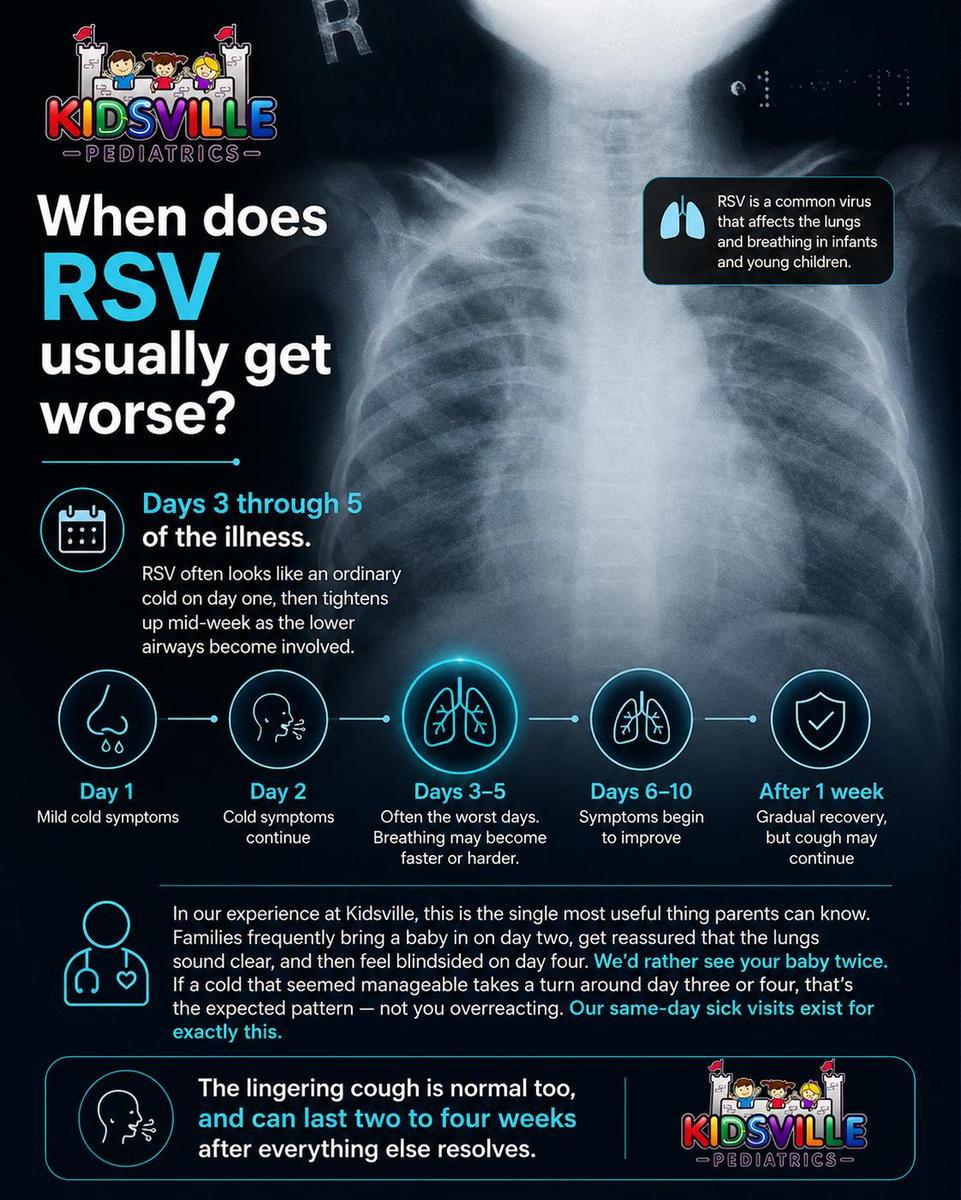
Days 3 through 5 of the illness. RSV often looks like an ordinary cold on day one, then tightens up mid-week as the lower airways become involved.
In our experience at Kidsville, this is the single most useful thing parents can know. Families frequently bring a baby in on day two, get reassured that the lungs sound clear, and then feel blindsided on day four. We’d rather see your baby twice. If a cold that seemed manageable takes a turn around day three or four, that’s the expected pattern — not you overreacting. Our same-day sick visits exist for exactly this.
The lingering cough is normal too, and can last two to four weeks after everything else resolves.
What can I do for RSV at home?
There’s no medication that shortens RSV — it’s a virus, so antibiotics don’t help, and the AAP does not recommend albuterol or steroids for routine bronchiolitis. Supportive care is the whole treatment, and it genuinely works:
- Saline drops and gentle suction before feeds and sleep. A clear nose is the difference between a baby who can eat and one who can’t.
- Smaller, more frequent feeds. A congested baby tires quickly; volume matters more than schedule.
- Cool-mist humidifier in the room, cleaned daily.
- Upright holding during the worst of the congestion. Never prop a mattress or add pillows — babies still sleep flat on their backs, no exceptions.
- Fever control with weight-based acetaminophen, only after checking the dose with us if your baby is under 3 months.
- Track wet diapers. It’s the simplest at-home measure of whether she’s keeping up on fluids.
Skip over-the-counter cough and cold medicines entirely. They aren’t safe for infants and toddlers and offer no benefit. Honey is off-limits under 12 months.
When should I go to the ER instead of calling the office?
Go straight to the emergency department or call 911 for:
- Bluish or grey lips, tongue, gums, or face
- Pauses in breathing, or breathing that stops
- A baby who is limp, unresponsive, or cannot be woken
- Severe retractions with visible struggle on every breath
- Grunting with each breath
For everything else — fast breathing, poor feeding, worsening cough, fewer wet diapers, fever in a young infant — call us first. Our After-Hours Nurse Line is staffed for overnight decisions like this one, and a nurse can help you decide in five minutes whether this is a morning appointment or an ER trip now.
How can I protect my baby from severe RSV?
The CDC now recommends every baby be protected by one of two immunizations. Most babies need only one, not both:
- Maternal RSV vaccine (Abrysvo) during weeks 32–36 of pregnancy, typically September through January. Protection passes to the baby and lasts about the first 6 months of life.
- Infant RSV antibody (nirsevimab or clesrovimab) for babies under 8 months whose mothers did not receive the maternal vaccine. It gives immediate protection lasting at least 5 months, and is usually given shortly before RSV season or within a week of birth for October–March babies.
A small group of high-risk children ages 8–19 months — those born prematurely with chronic lung disease, severe immunocompromise, or severe cystic fibrosis — are also recommended to receive nirsevimab before their second RSV season. Both options are covered by most private insurance, and nirsevimab is available at no cost through the Vaccines for Children program. Full details are on the CDC’s immunizations to protect infants page.
Everyday prevention helps too: handwashing before holding the baby, keeping infants away from anyone with cold symptoms, no smoking around the baby, and asking visitors to postpone during peak season. If you’re expecting, bring this up at your expecting parents visit so we can plan timing before your due date. Our team can also review RSV protection alongside the rest of your baby’s immunization schedule.
Can RSV be tested for in the office?
Yes. A quick nasal swab confirms RSV, though a positive result doesn’t change the treatment plan much — how your baby is breathing and feeding matters far more than which virus is on the swab. We test when it helps guide decisions, such as ruling out flu, sorting out a fever in a very young infant, or advising a household with a high-risk sibling.
This article is general information and is not a substitute for individualized medical advice about your child. If you have urgent concerns, call our office or the After-Hours Nurse Line, and seek emergency care for any breathing emergency.
Worried about your baby’s breathing? We can see you today.
Kidsville Pediatrics offers same-day sick appointments across all four DFW locations. Call the office nearest you — Mansfield 682-341-3910, Southlake 682-345-8010, or McKinney 469-885-9400 — or request an appointment online. After hours, our nurse line is always available. Where health starts early.


