
Are you looking for effective ways of babyproofing your house? It is vital to create a safe habitat for your little explorer. At Kidsville Pediatrics McKinney, we understand the importance of ensuring every corner of your home is a secure haven for your child. This comprehensive guide will walk you through foolproof strategies for childproofing your house, from securing furniture to safeguarding against common household hazards.
With practical tips and easy-to-follow steps, you’ll be equipped to protect your little ones from potential dangers. Let’s explore how to make safety a priority and transform your home into a secure playground for your children’s adventures.
The Alarming Statistics
According to the CDC, approximately 12,000 children and young adults die each year from unintentional injuries. Falls are a major concern, leading to around 8,000 hospital visits daily for kids under 19. Bicycle accidents result in 100 child fatalities and over 254,000 injuries annually. Drowning is particularly dangerous for kids ages 1 to 4, with most incidents occurring in residential pools and open water.
Common Household Dangers
Home injuries can be devastating. Each year, about 2,000 children under 14 die from accidents at home, primarily due to fire, burns, suffocation, drowning, firearms, falls, choking, and poisoning. Airway obstruction is especially concerning for infants, making babyproofing your house a critical safety measure.
Why Childproofing Your Home Is Essential

Babyproofing your house goes beyond basic safety; it’s about creating an environment where your children can safely explore and grow. Toddlers are naturally curious and, usually, don’t understand the dangers that are all around them. By taking proactive steps to childproof your house, you’re actively preventing a range of potential accidents, from minor mishaps to serious injuries.
Childproofing is a fundamental aspect of responsible parenting, offering you peace of mind and ensuring your home is a safe place for your children’s adventures and growth. At Kidsville Pediatrics McKinney, we emphasize the importance of childproofing as part of comprehensive pediatric urgent care.
Anticipating and Mitigating Risks
Every corner of your home can present unseen hazards to a young child. Something as simple as an unsecured bookshelf or an easily accessible household cleaner can pose a significant threat. Effective childproofing involves thinking like a child—anticipating their movements and interactions with their environment, then mitigating those risks. Foresight is key to fostering a home environment that is conducive to safe exploration and learning.
Anchoring and Stabilizing Furniture

One of the most important steps that you have to remember in babyproofing your house is to ensure that heavy furniture as well as appliances are safely anchored. This includes stabilizing TVs, bookcases, and dressers to the wall to prevent them from tipping over. It’s also wise to keep heavy items on lower shelves and in bottom drawers to reduce the risk of injury.
Safeguarding Against Toxic Substances

Children’s curiosity often leads them to explore cabinets and drawers. Keeping potentially harmful substances like cleaning agents, medications, and sharp objects in high or locked cabinets is essential. Check out cabinet child-proof locks so you can add an extra layer of security for your little one.
Electrical and Cord Safety

Electrical hazards are often overlooked in childproofing. Use outlet covers to keep electrical shocks at bay and have all the cords and wires bundled and well out of reach. Pay special attention to window blind cords, as they can pose a strangulation hazard. Ensure that all electrical appliances are unplugged and stored away when not in use.
Secure Windows and Stairs

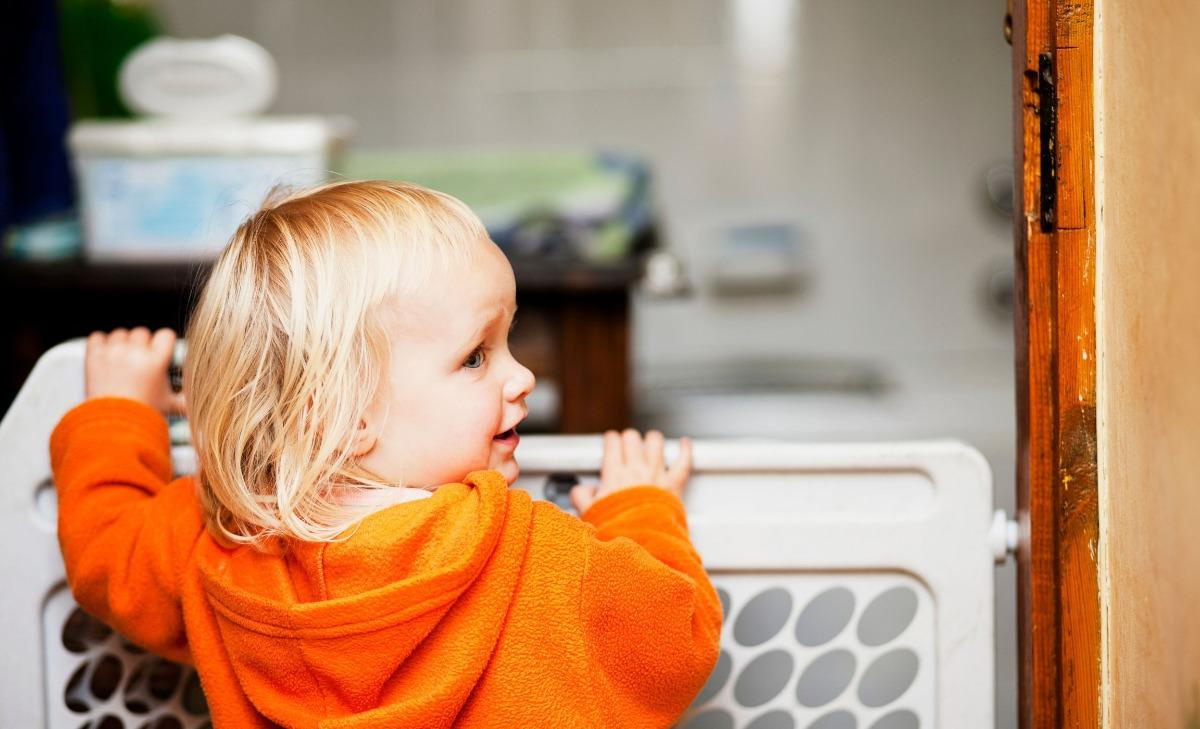
Windows and stairs can be particularly dangerous areas for young children. Babyproofing windows requires the installation of window guards and childproofing gates to prevent falls. For added safety, ensure that all window treatments are child-friendly, avoiding those with looped cords that could pose a strangulation risk. Childproof gate for stairs should be installed at the top and bottom of stairs to prevent falls.
Kitchen and Cooking Precautions

The kitchen is another area filled with potential hazards. Use appliance locks and stove knob covers to keep curious hands away from danger. Keep sharp utensils and fragile objects such as glass and porcelain items out of reach. When cooking, use the back burners and turn the pot handles inward to prevent hot spills. Never leave a child unattended in the kitchen, especially when using appliances.
Bathroom Hazards

The bathroom requires specific attention. Install toilet locks to prevent drowning risks and use non-slip mats to avoid slips and falls. Set your water heater to a low temperature to reduce the risk of scalding. Keep all toiletries, medicines, and cleaning supplies in locked cabinets out of your child’s reach. Pediatrician McKinney TX experts advise that you must always supervise your child during bath time to ensure their safety.
Creating a Child-Safe Environment in Every Room

Childproofing is a continuous process that evolves with your child’s growth and curiosity. It’s about ensuring every area of your home is as safe as possible for your little one. Here’s a comprehensive checklist to help you systematically address potential hazards in each room of your home.
General Home Safety
Secure Heavy Furniture and TVs: Anchor them to walls to prevent tipping.
Install Safety Gates: Place them at the top and bottom of stairs.
Window Safety: Ensure all windows have secure locks or guards.
Emergency Preparedness: Keep emergency numbers of the best pediatrician in McKinney TX and a first aid kit readily accessible.
Check Detectors: Regularly test smoke detectors and carbon monoxide alarms.
Nursery Safety
Crib Safety: Ensure the crib meets current safety standards with no loose parts. Keep any kind of pillow away from the crib; keep heavy blankets, and stuffed animals at bay, too.
Changing Table Safety: Use a securely fastened changing table and always maintain a hand on your baby during changes.
Kitchen Safety
Safety Latches: Install latches on cabinets and drawers containing hazardous items.
Use Back Burners: Turn pot handles inward while cooking.
Appliance Safety: Keep appliances and cords out of reach, and never leave a child unattended in a high chair.
Bathroom Safety
Water Heater Temperature: Set it below 120°F to prevent scalds.
Non-Slip Mats: Use these inside and outside the bathtub.
Supervised Bath Time: Never leave your child unattended in the bathroom.
Locked Cabinets: Store toiletries, medicines, and cleaning supplies securely.
Living Room Safety
Anchor Furniture: Secure bookcases and TV stands to walls.
Keep Small Objects Out of Reach: Items like coins and batteries can be choking hazards.
Corner Protectors: Use them on sharp furniture edges.
Cord Safety: Ensure blinds and curtains have no accessible cords.
Pediatric Urgent Care
Keeping your home hazard-free is an ongoing task that requires vigilance and adaptation as your child grows. Regularly inspect your home for potential dangers, and don’t hesitate to update your safety measures. Take an active role in educating your child about safety as they grow, emphasizing the importance of avoiding specific items and areas. Keep in mind that childproofing isn’t about limiting their exploration and learning; it’s about creating a secure environment that allows them to safely discover the world around them. It enables them to explore and discover the world around them without unnecessary risks. As parents, you are the primary caregiver so it is upon you to take measures in order to create a safe space for your little one. A trusted pediatric clinic can give more guidelines if you want to learn more about child safety.
At Kidsville Pediatrics McKinney, we believe in balancing safety precautions with the need for children to learn and grow through exploration and play. If you have any concerns or need further advice on babyproofing your house, don’t hesitate to reach out to us. We’re here to support you in creating a safe and nurturing environment for your family.
Click to Schedule An Appointment. Or visit/call our clinics: Kidsville Pediatrics Mansfield TX: 682-341-3910; 1759 Broad Park Circle S, Suite 201 & 205, Mansfield, TX Kidsville Pediatrics Southlake: 682-345-8010; 2813 W. Southlake Blvd Suite 100 Southlake, TX Kidsville Pediatrics McKinney: 469-885-9400; 5881 Virginia Pkwy. Suite 300 Mckinney, TX |
