

Bathing a newborn can be an incredibly rewarding bonding experience for both parent and child. However, for first-time parents, it may also feel intimidating. The delicate nature of an infant’s skin, their tiny size, and their need for special care make understanding how to bathe infant properly a crucial skill.
Preparation Is Key

Before beginning the bathing process, gather all necessary items to ensure everything is within arm’s reach. Here’s what you’ll need:
A baby bathtub or sink lined with a soft towel
Mild, fragrance-free baby soap and shampoo
A soft washcloth
A clean towel, preferably hooded, to keep your baby warm afterward
Clean clothes and a diaper
Optional: A soft-bristled baby brush for the scalp
Ensure the room is warm and free of drafts to keep your baby comfortable during and after the bath, a tip every Mansfield doctor would recommend for newborn care.
The First Few Weeks: Sponge Baths

For the first few weeks, until the umbilical cord stump falls off and the area heals, you should give your baby sponge baths. Here’s how to bathe infant during this stage:
Lay your baby on a soft, flat surface, such as a changing table or bed, lined with a towel.
Undress them but keep the diaper on to prevent any accidents.
Use a warm, damp washcloth to gently clean their face, avoiding soap near the eyes.
Clean the rest of their body with mild baby soap, paying attention to skin folds around the neck, arms, and legs.
Wipe down the diaper area last, using a clean part of the washcloth.
Pat your baby dry and dress them in clean clothes.
Transitioning to Tub Baths
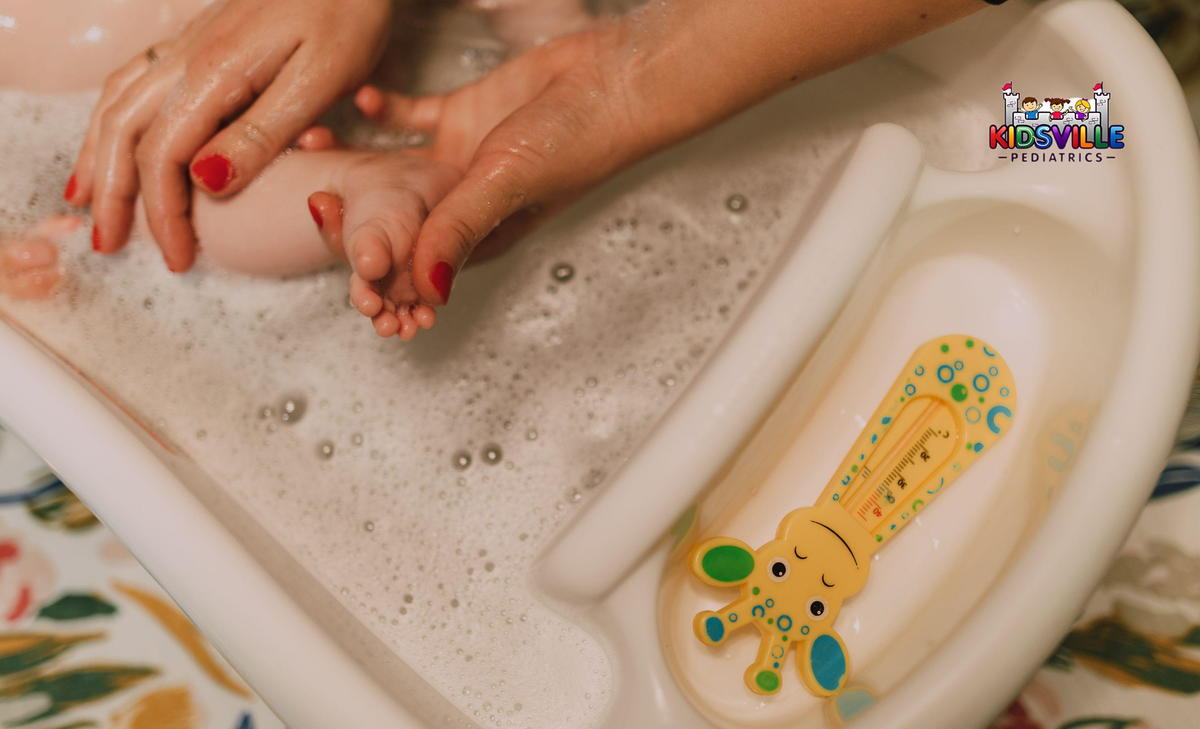
Once the umbilical cord stump has healed, you can start giving your baby a tub bath. Knowing how to bathe infant safely in a tub is essential for ensuring the experience is enjoyable for both of you.
Setting Up the Baby Tub
Use a baby bathtub or a clean sink lined with a towel to prevent slipping. Fill it with two to three inches of warm water, ensuring the temperature is between 98.6°F and 100°F. Always test the water temperature with your wrist or elbow before placing your baby in it—a safety measure any pediatrician Mansfield expert would suggest.
Step-by-Step Guide
Undress Your Baby: Gently undress your baby, leaving them wrapped in a towel to keep them warm.
Place Your Baby in the Tub: Support their head and neck with one hand while using the other to guide their body into the water. Keep a firm but gentle grip to ensure they feel secure.
Wash Their Face: Start by cleaning your baby’s face with a damp washcloth, avoiding soap. Pay special attention to the eye area, wiping from the inner corner outward to prevent the spread of germs.
Clean the Body: Use a small amount of baby soap to wash their body, focusing on areas like the neck, armpits, and behind the ears. Rinse thoroughly to avoid leaving any soap residue.
Shampoo the Scalp: If your baby has hair, apply a small amount of baby shampoo to their scalp and gently massage it in. Rinse carefully to avoid getting water in their eyes.
Rinse and Remove: Once you’ve cleaned your baby, gently rinse their body with clean water. Lift them out of the tub, supporting their head and neck, and wrap them immediately in a warm towel.
Dry and Dress: Pat your baby dry, making sure to gently dry those tiny creases and folds to avoid irritation. Afterward, dress them in clean clothes and a fresh diaper—because even Mansfield pediatricians agree, a cozy baby is a happy baby!
Safety Tips
Always stay with your baby during bath time—never leave them unattended, even for a second.
Avoid overbathing, as it can dry out their sensitive skin. Typically, two to three baths a week are enough.
Always use mild, fragrance-free products designed for babies.
Managing Common Challenges

Crying During Bath Time
It’s not uncommon for babies to cry during their baths. If your baby seems distressed, double-check the water temperature to ensure it’s just right—not too hot or too cold. At Kidsville Pediatrics Mansfield, we encourage parents to try singing or talking to their little ones during bath time—it’s a great way to help soothe them and make the experience more enjoyable.
Dry Skin
If your baby’s skin appears dry, apply a gentle, hypoallergenic baby moisturizer after the bath. Limiting bath time to 5-10 minutes can also help preserve their natural skin oils.
Cradle Cap
Cradle cap is a common condition that results in scaly patches on your baby’s scalp. To address it, gently loosen the scales with a soft-bristled baby brush before shampooing. Gently brush to avoid irritation and prevent any discomfort. Mansfield Pediatrics specialists to provide guidance on all your baby care concerns, including managing cradle cap with ease.
Bonding Through Bathing
Bath time is not just about cleanliness; it’s also an opportunity to bond with your baby. Maintaining eye contact, smiling, and talking to them during the bath can enhance your connection. Many parents find this routine becomes a cherished part of their day.
Bathing Frequency
While knowing how to bathe infant effectively is important, understanding how often to bathe them is equally crucial. Most newborns only need a bath two to three times per week. Bathing too frequently can remove natural oils from the skin, causing dryness. Focus on cleaning their face, hands, and diaper area daily.
Products to Avoid
Not all baby products are created equal. Avoid those with artificial fragrances, dyes, or harsh chemicals, as these can irritate your baby’s delicate skin. Always check labels for hypoallergenic and pediatrician-recommended formulas. When it comes to choosing the best for your baby, trust pediatrics in Mansfield, TX expert advice and product recommendations that prioritize your little one’s health and comfort.
Pedia Near Me
If you notice persistent skin issues, such as rashes, dryness, or peeling, consult your pediatrician. They can recommend appropriate skincare products or identify any underlying conditions.
As your baby grows and becomes more mobile, bath time may require adjustments. Transitioning from a baby tub to a regular bathtub typically occurs around six months, when your baby can sit up independently. Introducing toys and interactive activities can make bath time more engaging and enjoyable. For personalized tips and guidance, consult with a pediatrician in Mansfield to ensure a smooth transition and keep bath time safe and fun for your little one.
Mastering how to bathe infant is a vital part of early parenthood. By following these guidelines, you can ensure that your baby’s bath time is safe, enjoyable, and beneficial for their health and development. With a bit of practice and preparation, bath time can become one of the most special moments you share with your little one.
Click to Schedule An Appointment. Or visit/call our clinics: Kidsville Pediatrics Mansfield TX: 682-341-3910; 1759 Broad Park Circle S, Suite 201 & 205, Mansfield, TX Kidsville Pediatrics Southlake: 682-345-8010; 2813 W. Southlake Blvd Suite 100 Southlake, TX Kidsville Pediatrics McKinney: 469-885-9400; 5881 Virginia Pkwy. Suite 300 Mckinney, TX |
