
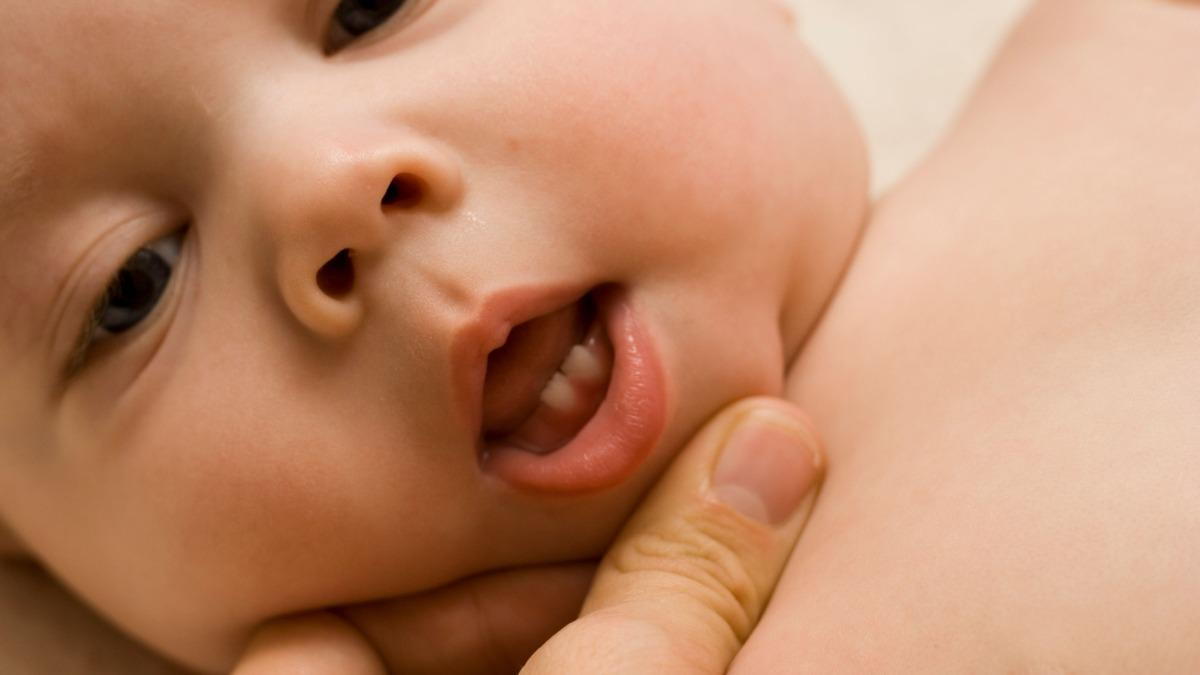
Few milestones in your baby’s first year bring as much excitement—and sometimes frustration—as teething problems. Those first tiny teeth are a sign of growth and development, but they can also bring sleepless nights, drooling bibs, and a fussy baby.
At Kidsville Pediatrics Southlake, we want to help families navigate this stage with confidence, providing guidance on what’s normal, how to soothe discomfort, and when it’s time to seek help from a pediatrician.
In this article, we’ll cover the key aspects of teething problems, from early signs to oral care and red flags parents should watch out for.
Early Signs of Teething
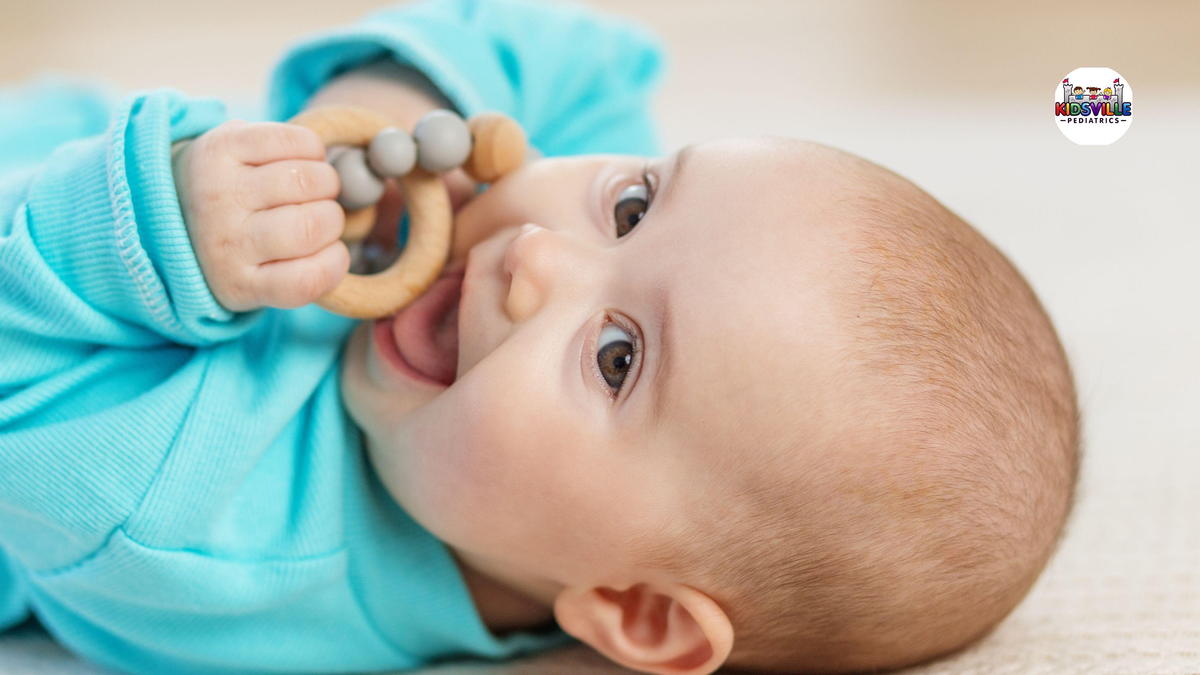
Every baby experiences teething differently—some sail through it with barely a fuss, while others find it uncomfortable and disruptive. Common early signs include:
Drooling: Increased saliva production is often one of the first indicators of teething. Parents may notice damp clothing, chin rashes, or the need for more frequent bib changes.
Irritability or fussiness: As teeth push through the gums, babies may feel soreness or pressure. This discomfort can lead to extra clinginess, crying, or disrupted sleep.
Biting and chewing: Babies often gnaw on toys, fingers, or even household objects to relieve gum pressure.
Gum swelling or redness: A small bump or inflamed area on the gums is usually visible where the tooth is about to erupt.
It’s important to remember that while these symptoms are common, not every sign is automatically linked to teething problems. Persistent fever, diarrhea, or illness-like symptoms should be evaluated separately by a pediatrician in Southlake.
Timeline of Baby Teeth Eruption
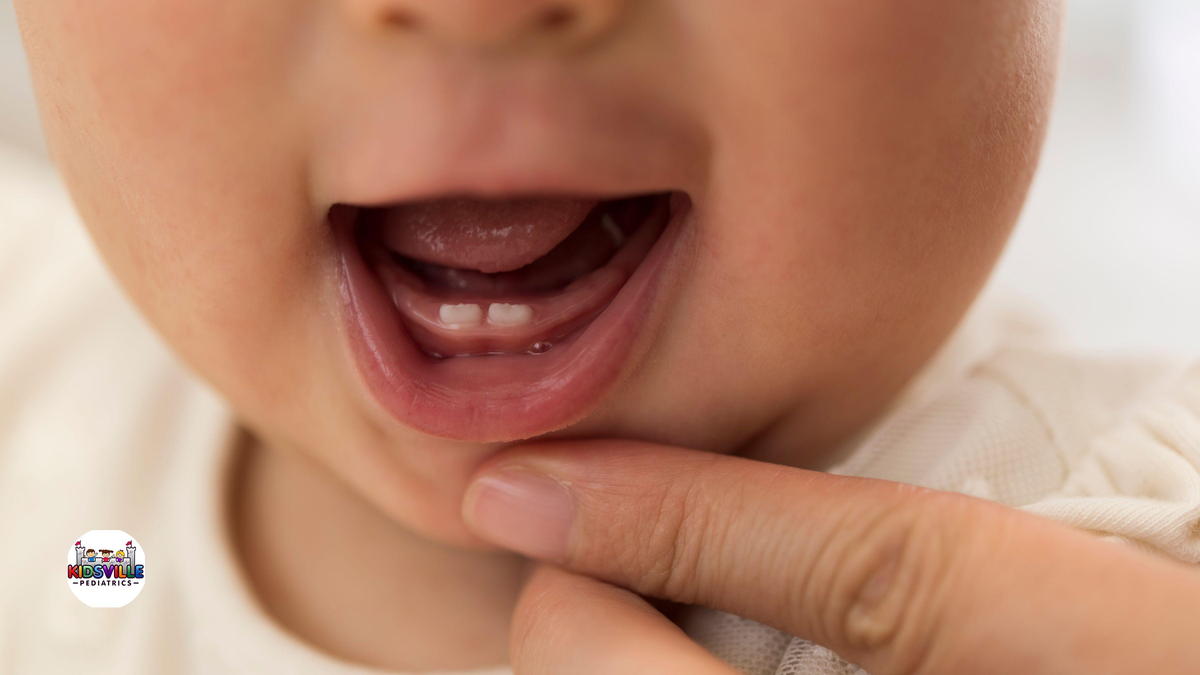
Most children get their first tooth between 4 to 7 months, but the timeline can vary widely. Some babies may cut their first tooth as early as 3 months, while others may not until after their first birthday.
Here’s a general guide:
6–10 months: Lower central incisors (bottom front teeth)
8–12 months: Upper central incisors (top front teeth)
9–13 months: Upper lateral incisors (either side of top front teeth)
10–16 months: Lower lateral incisors
13–19 months: First molars (back teeth)
16–23 months: Canines (pointed teeth)
23–33 months: Second molars
By around age 3, most children will have their full set of 20 primary teeth. Slight delays are usually harmless, but if no teeth have appeared by 18 months, it’s worth checking in with your Southlake Texas pediatrician.
Soothing Teething Discomfort

The good news is that discomfort from teething problems can usually be managed at home with safe, simple strategies.
Teething toys and rings: Soft, BPA-free teethers can provide counter-pressure on sore gums. Chilling (not freezing) them in the fridge adds extra relief.
Gentle gum massage: Using a clean finger, parents can rub the baby’s gums with light pressure.
Cold washcloth: A chilled (damp) washcloth can be a great, safe chewing option.
Distraction and comfort: Extra cuddles, playtime, or a soothing routine may help ease fussiness.
Avoid unsafe remedies:
Do not use teething gels containing benzocaine (can cause health risks).
Avoid amber teething necklaces (choking and strangulation hazards).
Never freeze teething toys, as this can cause gum injury.
If discomfort is significant, consult your pediatrician Southlake TX expert about whether over-the-counter infant pain relievers are appropriate.
Common Myths About Teething

Because teething often overlaps with developmental milestones and viral illnesses, several myths have persisted. Let’s set the record straight:
Myth: Teething causes high fever.
Fact: Mild temperature elevation is possible, but a true fever (≥100.4°F / 38°C) is not caused by teething and may indicate infection.Myth: Teething leads to diarrhea.
Fact: Some babies swallow more saliva during teething, which can loosen stools, but persistent diarrhea is not directly caused by teething and requires medical evaluation.Myth: Babies get seriously sick during teething.
Fact: While fussiness and drooling are normal, serious illness should never be attributed solely to teething. Always check with your Southlake pediatrics team.
By separating myths from facts, parents can respond appropriately and avoid overlooking other health issues.
When Teething Becomes a Problem

Most of the time, teething is an uncomfortable but manageable phase. However, there are situations where teething may point to a larger concern:
Excessive pain or inconsolable crying that doesn’t respond to comfort measures.
Feeding problems such as refusal to eat or drink, leading to poor nutrition or dehydration.
Delayed tooth eruption—if no teeth have appeared by 18 months or eruption seems significantly off-track.
Persistent or severe symptoms should not be brushed off as “just teething problems.” They may require a closer look from your child’s healthcare team at Kidsville Pediatrics Southlake.
Oral Hygiene During Teething
Establishing good oral hygiene habits early on sets the stage for lifelong dental health. Even before teeth erupt, parents can gently wipe their baby’s gums with a soft, damp cloth after feedings.
Once the first tooth appears:
Use a baby toothbrush with soft bristles and water.
Begin using a tiny smear of fluoride toothpaste (about the size of a grain of rice) once the child is old enough to spit.
Brush twice daily—especially before bedtime.
Avoid putting the baby to bed with a bottle, as this increases the risk of early cavities.
Around age one, most children should have their first dental visit. A Southlake pediatrician can guide families on proper oral health practices and recommend a trusted pediatric dentist if needed.
When to See a Pediatrician or Dentist
While teething is a normal part of growth, parents should seek medical guidance if they notice:
Persistent fever (≥100.4°F / 38°C)
Severe or prolonged diarrhea
Rashes that don’t clear with basic care
Bleeding or pus around the gums
Signs of dehydration (dry mouth, fewer wet diapers)
No teeth by 18 months
At Kidsville Pediatrics Southlake, we encourage parents to call us with any concerns, even if they’re unsure whether symptoms are teething-related. It’s always better to ask than to wait.
Pedia Near Me
Teething problems are one of those parenting stages that can feel long and exhausting, but they’re also a sign of your baby’s healthy development. With patience, safe soothing strategies, and the right guidance from your pediatrician in Southlake, families can get through it with fewer worries.
Remember: while drooling and fussiness are normal, persistent illness or unusual symptoms deserve a closer look. Good oral care habits should start early, and your pediatric team at Southlake pediatrics is always here to answer questions along the way.
At Kidsville Pediatrics Southlake, we’re committed to supporting families during every stage of childhood, from those first tiny teeth to the teenage years. If you have questions about teething or your child’s development, we invite you to schedule an appointment with our caring team.
