

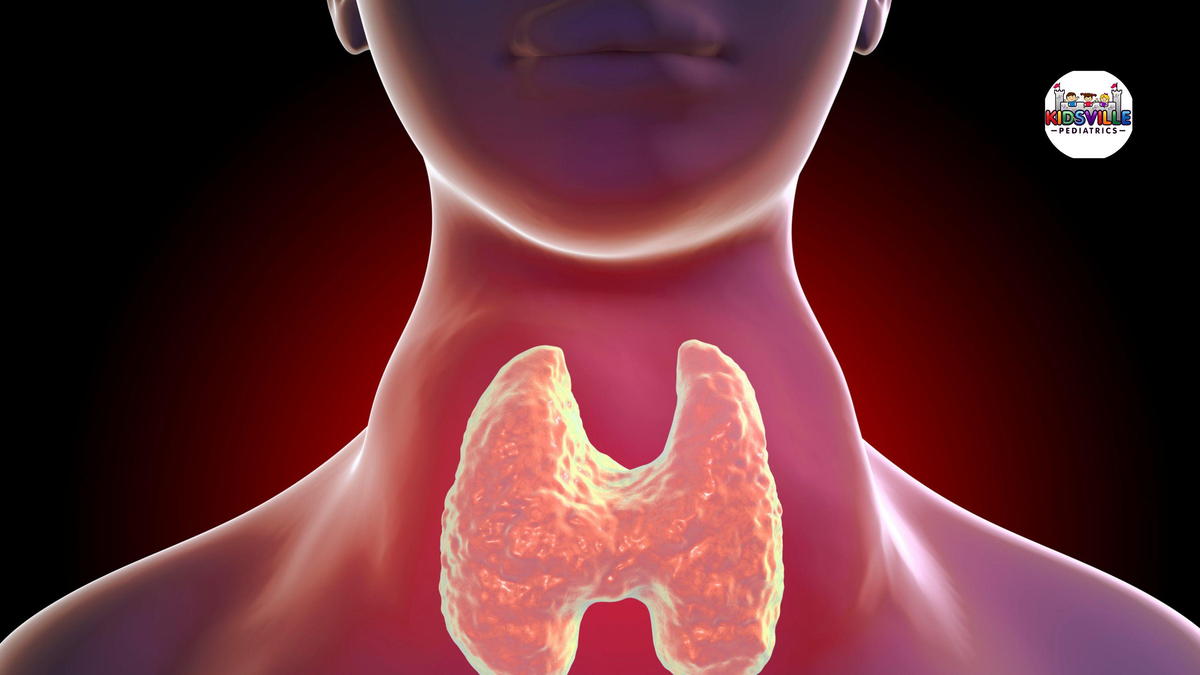
Thyroid disorders are conditions that affect the thyroid gland, a small butterfly-shaped gland in the neck responsible for producing hormones that regulate growth, metabolism, and overall development. In children, these disorders can present unique challenges, impacting physical growth, cognitive function, and emotional well-being.
At Kidsville Pediatrics, our team emphasizes early recognition and management of both hypothyroidism and hyperthyroidism to support children’s optimal health.

Overview of Thyroid Disorders in Children
Hypothyroidism occurs when the thyroid gland does not produce enough hormones, slowing metabolism and potentially affecting growth and energy levels. Common signs include fatigue, slowed growth, and constipation. On the other hand, hyperthyroidism involves excessive thyroid hormone production, which accelerates metabolism and may cause weight loss, rapid heart rate, irritability, and sleep disturbances.
Both conditions, if left untreated, can disrupt a child’s physical and cognitive development. Understanding the difference between hypo- and hyperthyroidism is crucial for timely intervention, particularly for parents seeking guidance from a trusted pediatrician.
The thyroid gland’s hormones also influence brain development, heart function, and bone growth. Even mild hormone imbalances can have long-term consequences, making early detection and treatment essential. At our Southlake clinic, routine checkups help monitor thyroid health in children, especially those with a family history of autoimmune conditions.
Causes and Risk Factors
Several factors can trigger thyroid disorders in children. Congenital hypothyroidism, present at birth, occurs when the thyroid gland is absent or underdeveloped. Autoimmune conditions, such as Hashimoto’s thyroiditis for hypothyroidism and Graves’ disease for hyperthyroidism, are among the most common causes in school-aged children. Certain medications and medical treatments, like radiation therapy, can also affect thyroid function.
Genetics plays a significant role, as children with a family history of thyroid disease are at higher risk. Premature infants and those with other autoimmune conditions may also be more susceptible. Identifying these risk factors early allows a Southlake TX Pediatrician to recommend proactive monitoring and interventions before complications arise.
Signs and Symptoms to Watch For
Parents should be alert for signs of thyroid dysfunction in their children. In hypothyroidism, look for slow growth, excessive sleepiness, weight gain despite a normal diet, and cold intolerance. Emotional changes, including irritability or low mood, may also appear.
Hyperthyroidism, meanwhile, may present as unexpected weight loss, rapid heartbeat, increased appetite, difficulty sleeping, and heightened anxiety or hyperactivity. Children might also show tremors, warm skin, or increased sweating. Early recognition of these symptoms is vital, and consulting a Southlake TX pediatrician can help confirm whether thyroid issues are the underlying cause.
Behavioral changes, in addition to physical signs, can be subtle. Teachers may notice concentration difficulties or sudden academic challenges, which is why sharing observations with a pediatrician in Southlake is essential for a comprehensive assessment.
Diagnostic Testing and Screening
Thyroid disorders in children are typically diagnosed through blood tests measuring TSH, T3, and T4 levels. Antibody tests can determine if an autoimmune condition is causing the problem. Imaging studies, such as ultrasound, may also be used to assess the structure of the thyroid gland.
Newborn screening programs are particularly important for early detection of congenital hypothyroidism. Early diagnosis and treatment can prevent intellectual disability and growth delays, emphasizing the importance of routine checkups with Southlake doctors or referrals as needed.

Treatment Approaches
Treatment for thyroid disorders depends on the type and severity of the condition. For hypothyroidism, hormone replacement therapy with levothyroxine is the standard approach. This treatment helps normalize metabolism, promotes proper growth, and supports cognitive development.
Children with hyperthyroidism may require antithyroid medications, which reduce hormone production, or in some cases, radioactive iodine therapy or surgery to remove part of the thyroid gland. Treatment plans are carefully individualized, considering a child’s age, symptom severity, and overall health. At Kidsville Pediatrics Southlake, we work closely with families to determine the most effective strategy while minimizing side effects.
Monitoring and Managing Long-Term Effects
Children with thyroid disorders require ongoing monitoring to ensure healthy growth and development. Regular blood tests track hormone levels, while physical assessments monitor height, weight, and puberty milestones. Cognitive and emotional development is also closely observed, as untreated thyroid imbalances can affect learning and behavior.
Potential complications from untreated thyroid disorders include delayed puberty, learning difficulties, heart problems, and metabolic issues. Collaboration with a Southlake TX pediatrician ensures children receive comprehensive care, including referrals to endocrinologists when specialized management is necessary. Long-term management emphasizes both medical treatment and lifestyle adjustments to maintain overall well-being.
Lifestyle, Nutrition, and Supportive Care
Supporting a child with thyroid disorders goes beyond medication. A balanced diet rich in nutrients like iodine, selenium, and zinc can support thyroid function. Regular physical activity helps regulate metabolism, maintain healthy weight, and support cardiovascular health.
Families should also advocate for school accommodations when needed, particularly if fatigue, attention difficulties, or growth delays affect academic performance. Emotional support and education about the condition help children feel empowered and reduce anxiety associated with chronic illness. The team at Kidsville Pediatrics provides guidance on these strategies, ensuring parents feel confident managing their child’s thyroid health.
In addition, creating a structured daily routine and maintaining regular checkups with a pediatrician Southlake expert reinforces consistency in treatment and lifestyle habits. Family involvement is crucial in monitoring symptoms, administering medication, and celebrating developmental milestones.
Pedia Near Me
Through careful monitoring, individualized treatment plans, and supportive care strategies, children can thrive despite thyroid challenges. At Kidsville Pediatrics, our team remains dedicated to empowering families with the knowledge, tools, and compassionate care needed to manage these conditions successfully.
Understanding thyroid disorders in children is essential for early detection, effective treatment, and long-term health. Both hypothyroidism and hyperthyroidism can significantly impact growth, metabolism, and overall development, making the guidance of a knowledgeable Southlake TX pediatrician invaluable.
